

The Eiffel Tower: More than just an icon?
Join in on a journey to uncover the fascinating history of one of the world's most recognisable landmarks, and explore a provocative question that challenges conventional understanding.

A Parisian marvel
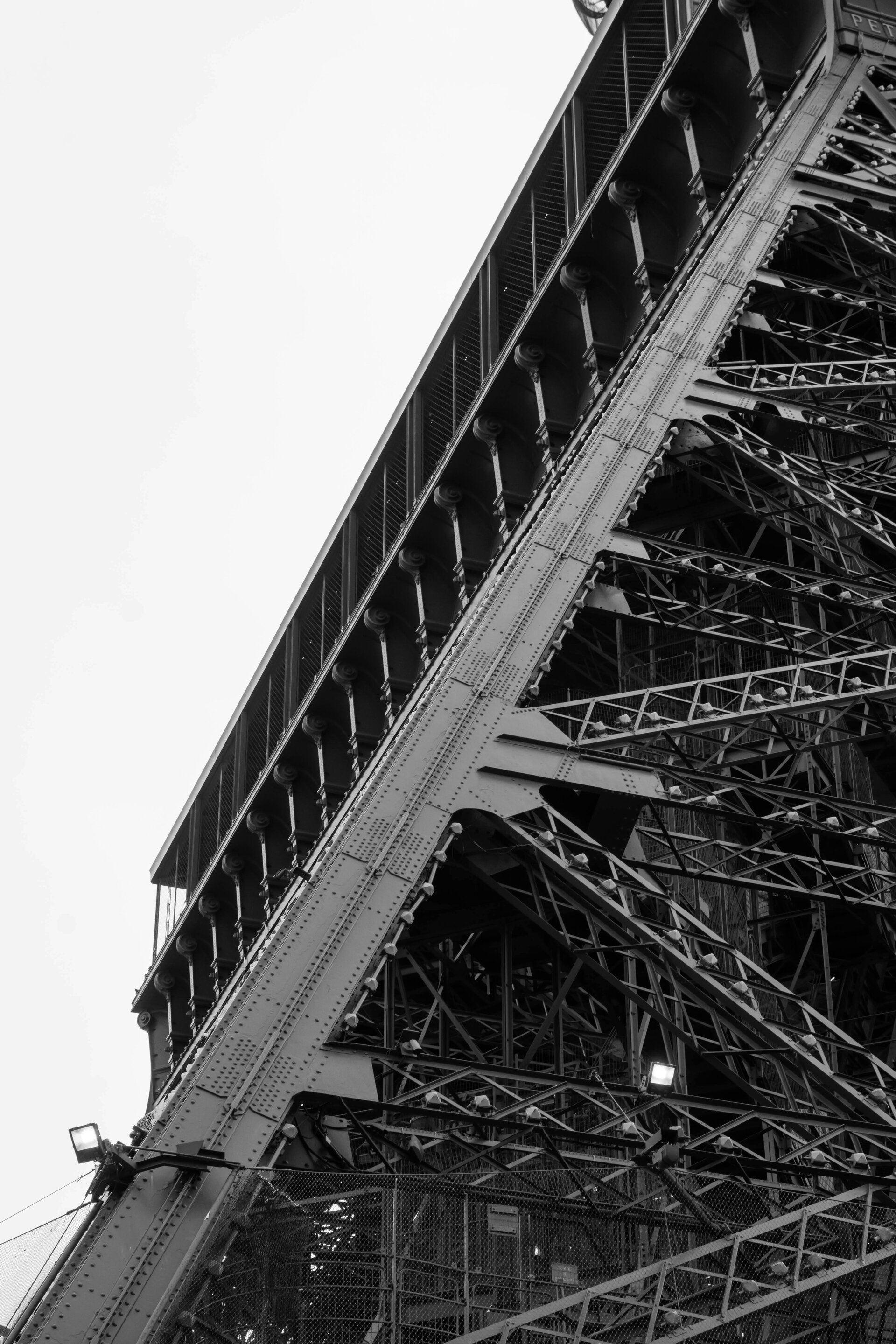
Erected in 1889 as the entrance arch to the 1889 World's Fair, the Eiffel Tower was initially met with mixed reactions. Designed by Gustave Eiffel, this iron lattice structure quickly became a symbol of industrial prowess and French ingenuity. Standing at 330 metres tall, it held the title of the world's tallest man-made structure for over 40 years. Discover the initial vision and the challenging construction that brought this iconic landmark to life.
Beyond its iconic status
While celebrated for its aesthetic beauty and panoramic views of Paris, the Eiffel Tower also played a crucial role in scientific and technological advancements. It served as a meteorological station, a laboratory for physics experiments, and, significantly, as a radio transmitter. Explore the early experiments with wireless telegraphy conducted from its summit, forever changing global communication.

Was it designed for more?
Considering its design and historical applications, I invite you to ponder: why does the Eiffel Tower appear to function, or perhaps even have been designed, as a power receiver or transmitter?
This provocative question pushes us to look beyond its commonly accepted narrative.
Could its intricate iron lattice and strategic location hint at a deeper, unacknowledged purpose?
For those fascinated by such historical enigmas and the potential for ancient technologies, I encourage you to delve deeper into our related theories.