

Unravelling the Mandela effect
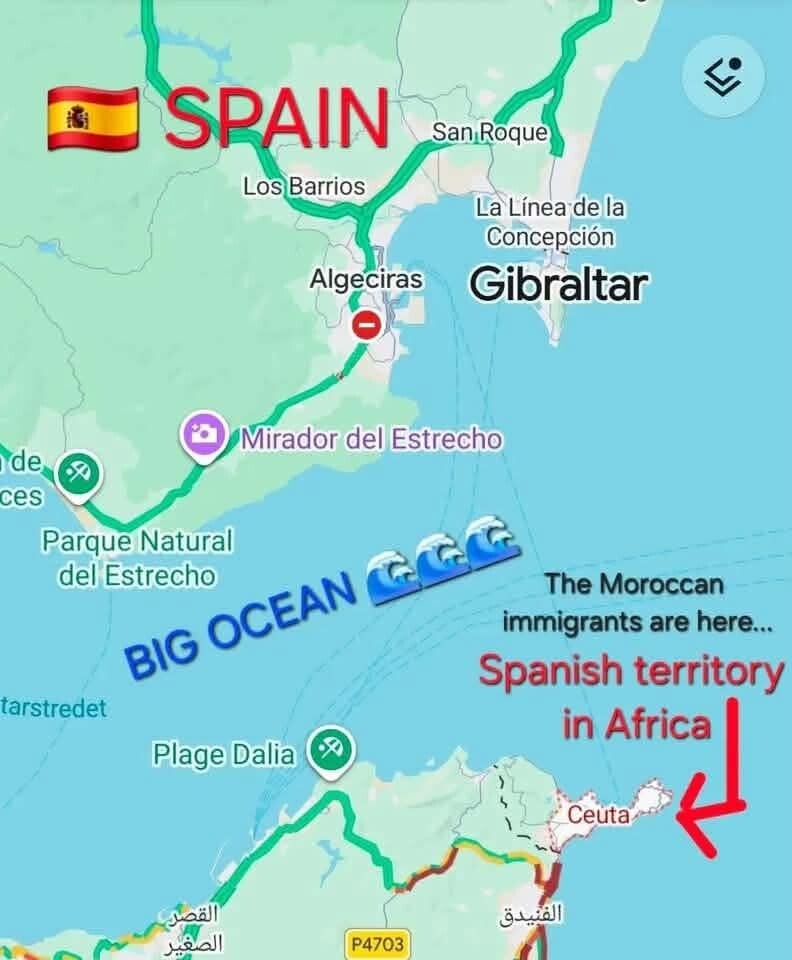
The pic to the left (click to enlarge) shows a very recent case where the Mandela effect could easily be created, while the mainstream media were busy reporting that Spain's Borders were being invaded in Ceutra, and showing footage of 'thousands' of what appeared to be, Morroccan Men flooding into Spain, however the same mainstream media forgot to state that Ceutra is in a Spanish colony, initially taken by Portugal, meaning it is actually in North Africa, not even in Europe, letbalone in Spain. Spain took that area of North Africa in 1415, but of course the reporting doesn't say this.
Welcome to RealEd, where I challenge assumptions and encourage critical thought. Today, I delve into a fascinating phenomenon that touches us all, known as the Mandela effect. Prepare to question your memories and consider how easily collective reality can be shaped.
What is the Mandela effect?
The Mandela effect describes a phenomenon where a large group of people share a false memory about a past event or detail.
It's not about individual forgetfulness, more a collective misremembering that can be quite unsettling.
It all began in 2009, Named after the widespread false memory of Nelson Mandela, the anti aprtheid activist, dying in prison in the 1980's, by a lady, who was a self proclaimed paranormal researcher and author, but of course he hadn't.
She later stated that she could even recall Nelson's widow's speech at his funeral, and eventually her story was made into a film.
This effect highlights the perplexing nature of shared perception and the unreliability of memory, so can you really believe the Main Stream Media news, or the newspapers?
From movie lines to brand logos, countless examples demonstrate how easily our collective consciousness can diverge from factual history.
Understanding this concept is crucial for everyone, as it challenges our understanding of reality, compared to the information we consume.

Why should everyone understand it?
The Mandela effect isn't just a quirky psychological phenomenon; it's a powerful demonstration of how susceptible our minds are to suggestion and how easily collective narratives can be influenced. Everyone stands to benefit from understanding this effect because it teaches us critical thinking and the importance of verifying information. In an age of widespread misinformation and social media echo chambers, recognising how collective memory can be "played" is a vital skill. It empowers you to question common assumptions and to look for objective evidence, rather than simply trusting shared recollections. This knowledge is essential for fostering a truly educated populace.

Our unique perspective: how we can be played
At RealEd, My approach to the Mandela effect goes beyond simply identifying examples.
I hope that people learn to explore the deeper implications of how such collective misremembering can be purposefully leveraged, or perhaps even engineered.
I believe that by understanding the mechanisms behind shared false memories, we can better protect ourselves from manipulation.
This isn't about conspiracy theories; it's about critical analysis of information and media. I encourage you to consider how narratives can, and are constructed, how information spreads, and how cognitive biases can make us vulnerable. BY learning to recognise the signs and develope the mental tools needed to discern fact from collectively held fiction. Your educated brain really is your most valuable asset, however in today's world, most only see the brain as an expensive box in their new car, and personally, I see that as a result of the Mandela Effect!
To quote the genius Carl Jung:
'Thinking is difficult, therefore let the herd pronounce judgement'
This quote is extremely good, and very true of the 'Armchair Warriors' I see on social media these days, however, you get nothing for nothing, so think first, act later 👍