The Sphinx: eroded by water?
Join us on a journey to uncover the true story behind the Great Sphinx. We challenge conventional wisdom and explore compelling evidence suggesting a different past than what we've been told. Prepare to have your perceptions shifted and your mind opened.
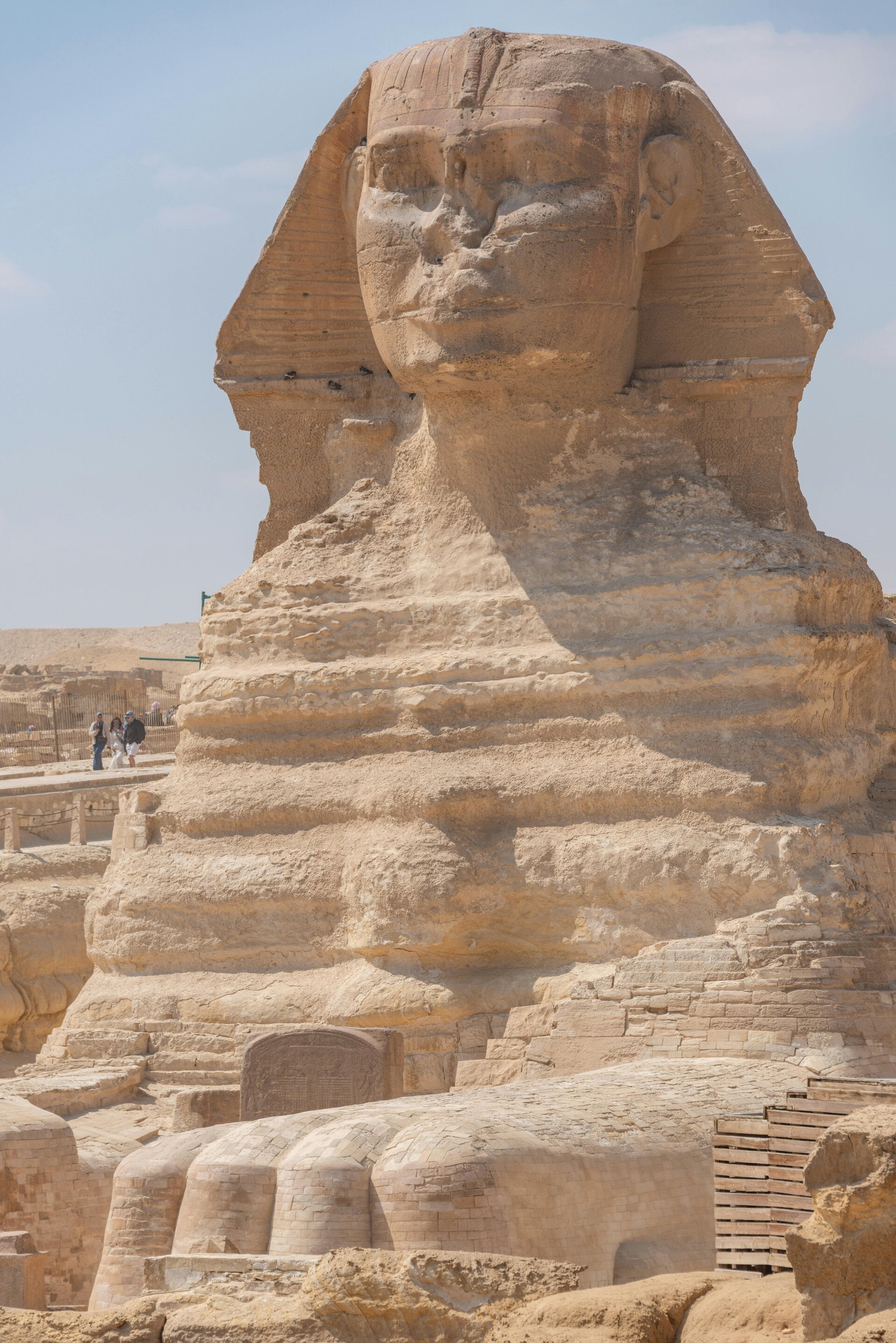
Unveiling the truth of the Sphinx's erosion
For decades, the narrative surrounding the Sphinx's weathering has pointed to wind and sand. However, I have a different perspective, which as a Heritage Specialist, who knows quite a lot about sandstone, suggests to me that water erosion played a significant role in shaping this ancient wonder. Explore the geological and scientific arguments that challenge the accepted timeline and offer a revolutionary view.

Why water, not wind?
The distinctive erosion patterns observed on the Sphinx and its enclosure walls are inconsistent with wind-blown sand. Instead, they bear a striking resemblance to weathering caused by prolonged exposure to heavy rainfall and floodwaters. This unique insight, not commonly found in mainstream history, prompts us to reconsider the environmental conditions in ancient Giza. Furthermore, ask yourself how the sand got there in the first place?

I believe that the entire story of Giza is fake
If the Sphinx's erosion points to water, then much of what we've been taught about the timeline and purpose of Giza may be incorrect. With this page, I challenge you to look beyond the accepted narratives and consider that the official history of this iconic site, and perhaps many others, is a fabrication. What if the true story is far more ancient and mysterious than we can imagine?
Have a look at:
&
See what you think 🤔