

Edgar Cayce: an unsung prophet?
Explore the life and legacy of Edgar Cayce, often called the “Sleeping Prophet”, and examine the predictions attributed to him with curiosity, context and care. In my view, education means developing your own brain: asking questions, checking sources and thinking beyond what you are told.
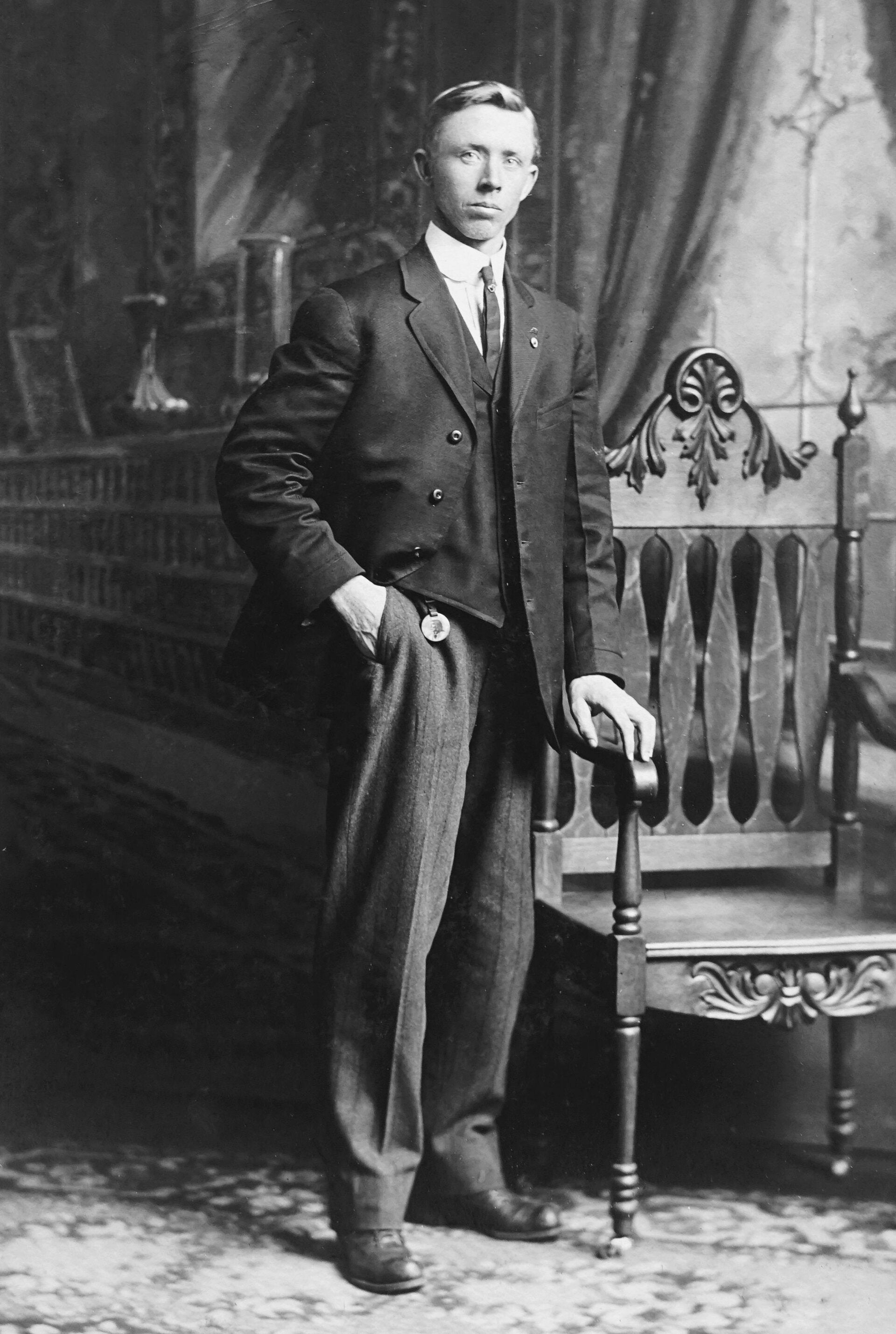
So who was Edgar Cayce?
Edgar Cayce (1877–1945) was an American known for giving thousands of readings while in a trance-like state.
His subjects ranged from health and spirituality to ancient civilisations, social change and future events.
His work continues to interest readers worldwide, but it should be approached as a historical and spiritual phenomenon, rather than as established scientific evidence.
By reading claims in their original context, you can distinguish interpretation from quotation, and compare them with independently verifiable history.

Cayce and the Second World War
Supporters often link Cayce’s readings to warnings about conflict, political upheaval and the rise of authoritarian powers before and during the Second World War.
However, broad statements about unrest or war can be interpreted in many ways after events have happened.
A fair investigation asks when a statement was recorded, what it actually said, whether it was specific, and whether alternative readings are possible.
This is a useful lesson in historical reasoning: compelling stories deserve careful checking.
So look for primary documents, reliable timelines and evidence that challenges as well as supports a claim.

What about 2026?
Apparently Edgar Cayce predicted that 2026 would bring major changes for the better.
Whilst this is an uplifting idea, pariculaely in liight of all the uncertainty in the world, no predictions can really be treated as fact, and interpretations attributed to Cayce are frequently debated.
Before sharing any quote or forecast, seek the original reading, its date and its full wording; be especially cautious of claims that cannot be traced to a credible source.
The real opportunity is not to wait for a predicted turning point. We can make positive change through informed choices, compassion, learning and the confidence to question.
“The important thing is not to stop questioning.”
This is My principle for independent learners.